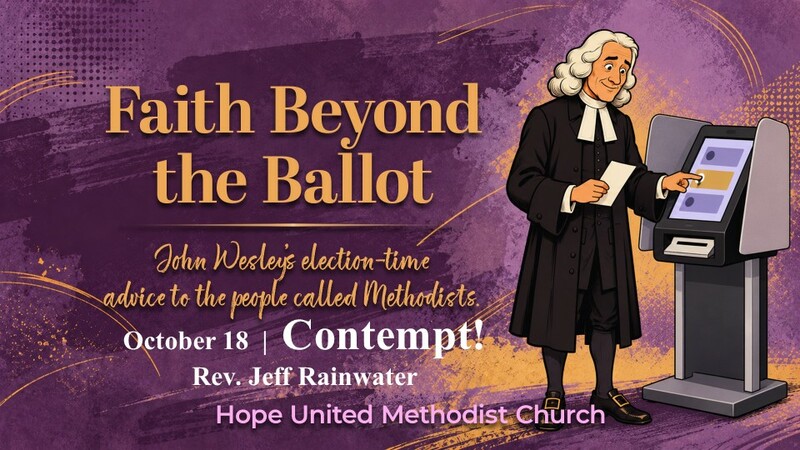
The series begins with the problem beneath much of our public speech. In Jesus' parable, the Pharisee measures his righteousness against a person he has already placed beneath him; the challenge for the congregation is to recognize that temptation in ourselves, without turning the Pharisee into a caricature of Jewish people. Political contempt can work the same way, allowing us to feel certain of our virtue because we have decided what those people are like. This sermon can distinguish contempt from moral judgment and anger at injustice. Wesley's warning about a "sharpened" spirit invites us to notice the moment disagreement becomes a readiness to dismiss or wound another person, even before we say a word.